Showing posts with label Great Minds of Psychology. Show all posts

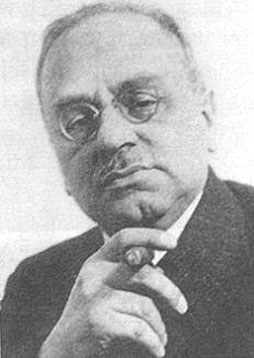
Alfred Adler


1870-1937
Psychiatrist known for his theory of individual psychology and for his pioneering work with children and families.
Alfred Adler was born in a suburb of Vienna, Austria, in 1870. After graduating from the University of Vienna medical school in 1895, he at first practiced ophthalmology but later switched to psychiatry. In 1902, Adler joined the discussion group that later became the Vienna Psychoanalytic Society. Sigmund Freud was also a member. Adler eventually became president and editor of its journal. After 1907, however, Adler's growing disagreement with Freud's theories, especially with their heavy emphasis on the role of sexuality in personality formation, alienated him from the ranks of Freudians.

Albert Bandura

1925 -       
American psychologist whose work is concentrated in the area of social learning theory.
Albert Bandura was born in the province of Alberta, Canada, and received his B.A. from the University of British Columbia. He earned his M.A. and Ph.D. in clinical psychology at the University of Iowa, focusing on social learning theories in his studies with Kenneth Spence and Robert Sears. Graduating in 1952, Bandura completed a one-year internship at the Wichita Guidance Center before accepting an appointment to the department of psychology at Stanford University, where he has remained throughout his career. In opposition to more radical behaviorists, Bandura considers cognitive factors as causal agents in human behavior. His area of research, social cognitive theory, is concerned with the interaction between cognition, behavior, and the environment.

Abraham Maslow

1908-1970
American psychologist.
A central figure in humanistic psychology and in the human potential movement, Abraham Maslow is known especially for his theory of motivation. He was born and raised in Brooklyn, New York, and received his Ph.D. in psychology from the University of Wisconsin in 1934. Maslow then began medical studies, which he discontinued within a year, after which he was offered a postdoctoral research fellowship to work with Edward Thorndike at Columbia University. After moving to New York, Maslow met many prominent European psychologistsand social scientists who had fled Nazi Germany. Several of these emigrés became his mentors, including psychoanalysts Alfred Adler, Erich Fromm, and Karen Horney and Gestalt psychologists Max Wertheimer (1880-1943) and Kurt Koffka (1886-1941). In 1937 Maslow began teaching at the newly opened Brooklyn College. At the urging of anthropologist Ruth Benedict (1887-1948), whom Maslow had met at Columbia, he spent the summer of 1938 doing field work on a Blackfoot Indian reservation in Alberta, Canada, with financial support from the Social Science Research Council. In 1951 Maslow became the head of the psychology department at Brandeis University, where he remained until a year before his death in 1970.

Carl Jung

1875-1961
Swiss psychiatrist and founder of analytic psychology.
Carl Jung was born in Switzerland, the son of a Swiss Reform pastor. Having decided to become a psychiatrist, he enrolled in medical school at the University of Basel, from which he received his degree in 1900. Serving as an assistant at the University of Zurich Psychiatric Clinic, Jung worked under psychiatrist Eugen Bleuler (1857-1939), a psychiatrist renowned for his work on schizophrenia. Jung also traveled to France to study with the well-known psychiatrist Pierre Janet (1859-1947) as well. In 1905, he was appointed to a faculty position in psychiatry at the University of Zurich and became a senior physician at its clinic. Eventually, a growing private practice forced him to resign his university position. Jung's early published studies on schizophrenia established his reputation, and he also won recognition for developing a word association test.

Carl Rogers

1902-1987
American psychologist who developed a nondirective, patient-centered method of psychotherapy known as humanistic psychology.
Carl Rogers was born in Oak Park, Illinois. Raised in a fundamentalist Christian home, Rogers attended the University of Wisconsin and studied for the ministry at Union Theological Seminary before deciding to pursue a doctorate in education and clinical psychology at Columbia University. Between 1928 and 1939, Rogers worked as a counselor at the Society for the Prevention of Cruelty to Children in Rochester. In 1940, he was appointed to the faculty of Ohio State University. By this time, he had worked out much of his new client-centered system of therapy, which was set forth in his second book, Counseling and Psychotherapy, published in 1942.

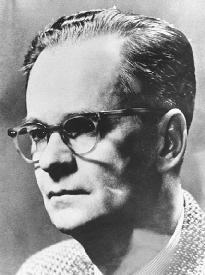
B. F. Skinner

1904-1990
American psychologist and advocate of behaviorism.
B. F. (Burrhus Frederic) Skinner was born in Susquehanna, Pennsylvania. As a youth, he showed talent for music and writing, as well as mechanical aptitude. He attended Hamilton College as an English major, with the goal of becoming a professional writer. After graduation, Skinner, discouraged over his literary prospects, became interested in behavioristic psychology after reading the works of John Watson and Ivan Pavlov. He entered Harvard University as a graduate student in psychology in 1928 and received his degree three years later. Skinner remained at Harvard through 1936, by which time he was a junior fellow of the prestigious Society of Fellows. While at Harvard, he laid the foundation for a new system of behavioral analysis through his research in the field of animal learning, utilizing unique experimental equipment of his own design.

Sigmund Freud

1856-1939
Austrian neurologist and the founder of psychoanalysis.
Sigmund Freud was born in Moravia. When he was three years old, his family moved to Vienna, the city where he was to live until the last year of his life. At the age of 17, Freud entered the University of Vienna's medical school, where he pursued a variety of research interests. Although primarily interested in physiological research, Freud was forced to enter into clinical practice due to the difficulty of obtaining a university appointment—aggravated, in his case, by anti-Semitic attitudes and policies. After additional independent research and clinical work at the General Hospital of Vienna, Freud entered private practice, specializing in the treatment of patients with neurological and hysterical disorders.