Welcome!


Consult Kibbutz is a P2P (peer to peer) resource for those seeking advice on common psychological issues in everyday life. Here you will find extensive information on modern day psychology as well as an interactive forum in which users can anonymously seek out personalized advice or offer suggestions to others experiencing similar problems.

Disclaimer: Please note if you think you may have a psychological problem then you should seek out a registered health professional in your area and not here in this group. Any advice given in this forum/group are not meant to treat or diagnose any disorder or establish any sort of dr/client relationship. If advice is given it should be constructive and helpful to the individual.

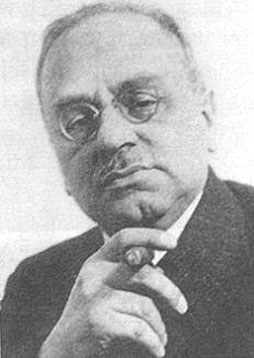
Alfred Adler


1870-1937
Psychiatrist known for his theory of individual psychology and for his pioneering work with children and families.
Alfred Adler was born in a suburb of Vienna, Austria, in 1870. After graduating from the University of Vienna medical school in 1895, he at first practiced ophthalmology but later switched to psychiatry. In 1902, Adler joined the discussion group that later became the Vienna Psychoanalytic Society. Sigmund Freud was also a member. Adler eventually became president and editor of its journal. After 1907, however, Adler's growing disagreement with Freud's theories, especially with their heavy emphasis on the role of sexuality in personality formation, alienated him from the ranks of Freudians.

Albert Bandura

1925 -       
American psychologist whose work is concentrated in the area of social learning theory.
Albert Bandura was born in the province of Alberta, Canada, and received his B.A. from the University of British Columbia. He earned his M.A. and Ph.D. in clinical psychology at the University of Iowa, focusing on social learning theories in his studies with Kenneth Spence and Robert Sears. Graduating in 1952, Bandura completed a one-year internship at the Wichita Guidance Center before accepting an appointment to the department of psychology at Stanford University, where he has remained throughout his career. In opposition to more radical behaviorists, Bandura considers cognitive factors as causal agents in human behavior. His area of research, social cognitive theory, is concerned with the interaction between cognition, behavior, and the environment.

Abraham Maslow

1908-1970
American psychologist.
A central figure in humanistic psychology and in the human potential movement, Abraham Maslow is known especially for his theory of motivation. He was born and raised in Brooklyn, New York, and received his Ph.D. in psychology from the University of Wisconsin in 1934. Maslow then began medical studies, which he discontinued within a year, after which he was offered a postdoctoral research fellowship to work with Edward Thorndike at Columbia University. After moving to New York, Maslow met many prominent European psychologistsand social scientists who had fled Nazi Germany. Several of these emigrés became his mentors, including psychoanalysts Alfred Adler, Erich Fromm, and Karen Horney and Gestalt psychologists Max Wertheimer (1880-1943) and Kurt Koffka (1886-1941). In 1937 Maslow began teaching at the newly opened Brooklyn College. At the urging of anthropologist Ruth Benedict (1887-1948), whom Maslow had met at Columbia, he spent the summer of 1938 doing field work on a Blackfoot Indian reservation in Alberta, Canada, with financial support from the Social Science Research Council. In 1951 Maslow became the head of the psychology department at Brandeis University, where he remained until a year before his death in 1970.

Carl Jung

1875-1961
Swiss psychiatrist and founder of analytic psychology.
Carl Jung was born in Switzerland, the son of a Swiss Reform pastor. Having decided to become a psychiatrist, he enrolled in medical school at the University of Basel, from which he received his degree in 1900. Serving as an assistant at the University of Zurich Psychiatric Clinic, Jung worked under psychiatrist Eugen Bleuler (1857-1939), a psychiatrist renowned for his work on schizophrenia. Jung also traveled to France to study with the well-known psychiatrist Pierre Janet (1859-1947) as well. In 1905, he was appointed to a faculty position in psychiatry at the University of Zurich and became a senior physician at its clinic. Eventually, a growing private practice forced him to resign his university position. Jung's early published studies on schizophrenia established his reputation, and he also won recognition for developing a word association test.

Carl Rogers

1902-1987
American psychologist who developed a nondirective, patient-centered method of psychotherapy known as humanistic psychology.
Carl Rogers was born in Oak Park, Illinois. Raised in a fundamentalist Christian home, Rogers attended the University of Wisconsin and studied for the ministry at Union Theological Seminary before deciding to pursue a doctorate in education and clinical psychology at Columbia University. Between 1928 and 1939, Rogers worked as a counselor at the Society for the Prevention of Cruelty to Children in Rochester. In 1940, he was appointed to the faculty of Ohio State University. By this time, he had worked out much of his new client-centered system of therapy, which was set forth in his second book, Counseling and Psychotherapy, published in 1942.

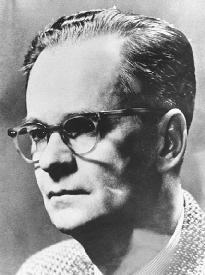
B. F. Skinner

1904-1990
American psychologist and advocate of behaviorism.
B. F. (Burrhus Frederic) Skinner was born in Susquehanna, Pennsylvania. As a youth, he showed talent for music and writing, as well as mechanical aptitude. He attended Hamilton College as an English major, with the goal of becoming a professional writer. After graduation, Skinner, discouraged over his literary prospects, became interested in behavioristic psychology after reading the works of John Watson and Ivan Pavlov. He entered Harvard University as a graduate student in psychology in 1928 and received his degree three years later. Skinner remained at Harvard through 1936, by which time he was a junior fellow of the prestigious Society of Fellows. While at Harvard, he laid the foundation for a new system of behavioral analysis through his research in the field of animal learning, utilizing unique experimental equipment of his own design.

Sigmund Freud

1856-1939
Austrian neurologist and the founder of psychoanalysis.
Sigmund Freud was born in Moravia. When he was three years old, his family moved to Vienna, the city where he was to live until the last year of his life. At the age of 17, Freud entered the University of Vienna's medical school, where he pursued a variety of research interests. Although primarily interested in physiological research, Freud was forced to enter into clinical practice due to the difficulty of obtaining a university appointment—aggravated, in his case, by anti-Semitic attitudes and policies. After additional independent research and clinical work at the General Hospital of Vienna, Freud entered private practice, specializing in the treatment of patients with neurological and hysterical disorders.

Statistics in Psychology

A branch of mathematics devoted to the collection, compilation, display, and interpretation of numerical data.

Psychologists rely heavily on statistics to help assess the meaning of the measurements they make. Sometimes the measurements involve individuals who complete psychological tests; at other times, the measurements involve statistics that describe general properties of groups of people or animals.

Sports Psychology

A developing subfield of psychology concerned with applying psychological theories and research to sports and other recreational activities.

Sports—which involve emotion, competition, cooperation, achievement, and play—provide a rich area for psychological study. People involved in sports attempt to master very difficult skills, often subjecting themselves to intense physical stress as well as social pressure. When psychologists began studying sports in the 1930s and 1940s, they focused on motor performance and the acquisition of motor skills. Sports psychology emerged as a distinct discipline in the 1960s, dominated by theories of social psychology. Since then, research has expanded into numerous areas such as imagery training, hypnosis, relaxation training, motivation, socialization, conflict and competition, counseling, and coaching. Specific sports and recreational specialties studied include baseball, basketball, soccer, volleyball, tennis, golf, fencing, dance, and many others.

Sociobiology

A term coined by the eminent entomologist Edward O. Wilson to define a field of study combining biology and social sciences.

In his 1975 work, Sociobiology: The New Synthesis, entomologist Edward O. Wilson first coined the term "sociobiology" to create a new field of study combining biology and social sciences, especially anthropology and sociology. Sociobiologists study the biological nature of human behavior and personality according to the tenet that all social behavior has a biological basis.

Social Psychology

The study of the psychology of interpersonal relationships.

Social psychology is the study of human interaction, including communication, cooperation, competition, leadership, and attitude development. Although the first textbooks on the subject of social psychology were published in the early 1900s, much of the foundation for social psychology studied in the 1990s is based on the work of the behavioral psychologists of the 1930s. Behavioral psychologists were among the first to call for scientific measures and analysis of human behavior, an emphasis on which social psychologists continue to focus. Social psychologists also study the way individuals behave in relationship to others, and, alternatively, how groups act to shape the behavior of individuals.

School Psychology

One of the human service fields of psychology whose aim is to help students, teachers, parents, and others understand each other.

Developed in 1896 at the University of Pennsylvania in a clinic that studied and treated children considered morally or mentally defective, the field of school psychology today includes 30,000 psychologists, most of whom work in educational systems throughout the United States.

Psychotherapy - Psychodynamic Approach, Behavioral Techniques, Cognitive Methods, Family and Group Therapy

The treatment of mental or emotional disorders and adjustment problems through the use of psychological techniques rather than through physical or biological means.

Psychoanalysis, the first modern form of psychotherapy, was called the "talking cure," and the many varieties of therapy practiced today are still characterized by their common dependence on a verbal exchange between the counselor or therapist and the person seeking help. The therapeutic interaction is characterized by mutual trust, with the goal of helping individuals change destructive or unhealthy behaviors, thoughts, and emotions. It is common for experienced therapists to combine several different approaches or techniques. The most common approaches are discussed below.

Psychosurgery

Highly controversial medical procedures where areas of the brain are destroyed or disabled through surgery as treatment for mental illness.

Psychosurgery involves severing or otherwise disabling areas of the brain to treat a personality disorder, behavior disorder or other mental illness. The most common form of psychosurgery is the lobotomy, where the nerves connecting the frontal lobes of the brain and the thalamus or hypothalamus are severed. Performed first in the late 1930s, by the 1940s lobotomies were recommended for patients diagnosed with schizophrenia, severe obsessive-compulsive disorder, severe depression, and uncontrollable aggressive behavior. Other psychosurgeries also involve severing nerve connections to the hypothalamus, since it plays a key role in controlling emotions. Psychosurgery has been recommended less frequently as more effective drugs for treatment of psychological disorders have been developed.

Psychophysics

The subfield of psychology that deals with the transformation from the physical to the psychological through detection, identification, discrimination, and scaling.

Psychophysics originated with the research of Gustav Fechner (1801-1887), who first studied the relationship between incoming physical stimuli and the responses to them. Psychophysicists have generally used two approaches in studying our sensitivity to stimuli around us: measuring the absolute threshold or discovering the difference threshold. In studying the absolute threshold using the method of constant stimuli, an experimenter will, for example, produce an extremely faint tone which the listener cannot hear, then gradually increase the intensity until the person can just hear it; on the next trial, the experimenter will play a sound that is clearly heard, then reduce its intensity until the listener can no longer hear it. Thresholds can also be ascertained through the method of constant stimuli. In this approach, stimuli of varying intensity are randomly presented. Although an observer's measured threshold will change depending on methodology, this technique gives an estimate of an individual's sensitivity.

Psychology/Psychologist

The science which studies behavior and mental processes.

As psychology has grown and changed throughout its history, it has been defined in numerous ways. As early as 400 B.C., the ancient Greeks philosophized about the relationship of personality characteristics to physiological traits. Since then, philosophers have proposed theories to explain human behavior. In the late 1800s the emergence of scientific method gave the study of psychology a new focus. In 1879, the first psychological laboratory was opened in Leipzig, Germany, by Wilhelm Wundt (1832-1920), and soon afterwards the first experimental studies of memory were published. Wundt was instrumental in establishing psychology as the study of conscious experience, which he viewed as made up of elemental sensations.

Psychoanalysis – Development of the Personality, Freud’s Critics

A method of treatment for mental, emotional, and behavioral dysfunctions as developed by Sigmund Freud.

Developed in Vienna, Austria, by Sigmund Freud (1856-1939), psychoanalysis is based on an approach in which the therapist helps the patient better understand him- or herself through examination of the deep personal feelings, relationships, and events that have shaped motivations and behavior. Freud developed his theories during the end of the 19th and the early part of the 20th centuries in Vienna, Austria, where he was a practicing physician specializing in neurological disorders. Freud's interest originated in his medical practice when he encountered patients who were clearly suffering physical symptoms for which he could find no organic, or biological, cause. Freud's first attempt to get at the psychological cause of these patients' pain was through hypnosis, which he studied in Paris in 1885. He found the results to be less than he'd hoped, however, and soon borrowed from a Viennese contemporary the idea of getting a patient to simply talk about his or her problems. Freud expanded upon this practice, however, by creating the idea of "free association," in which a patient is encouraged to speak in a non-narrative, non-directed manner, with the hope that he or she will eventually reveal/uncover the unconscious heart of the problem. This sort of unbridled, undirected self-exploration became one of the signature tenets of psychoanalysis.

Psychiatry/Psychiatrist

A physician who specializes in the diagnosis and treatment of mental disorders.

Psychiatrists treat patients privately and in hospital settings through a combination of psychotherapy and medication. There are about 41,000 practicing psychiatrists in the United States. Their training consists of four years of medical school, followed by one year of internship and at least three years of psychiatric residency. Psychiatrists may receive certification from the American Board of Psychiatry and Neurology (ABPN), which requires two years of clinical experience beyond residency and the successful completion of a written and an oral test. Unlike a medical license, board certification is not legally required in order to practice psychiatry.

Physiological Psychology

The area of experimental psychology concerned specifically with how biology shapes behavior and mental processes.

The area of experimental known as physiological psychology has evolved in the 1990s. Increasingly, the field is being referred to as behavioral neuroscience, replacing physiological psychology and biological psychology. Nonetheless, the goals of psychologists in this field remain the same: to utilize basic research to explain behavior in physiological terms, working on the assumption that for every behavioral event there is a corresponding physical event or series of events.